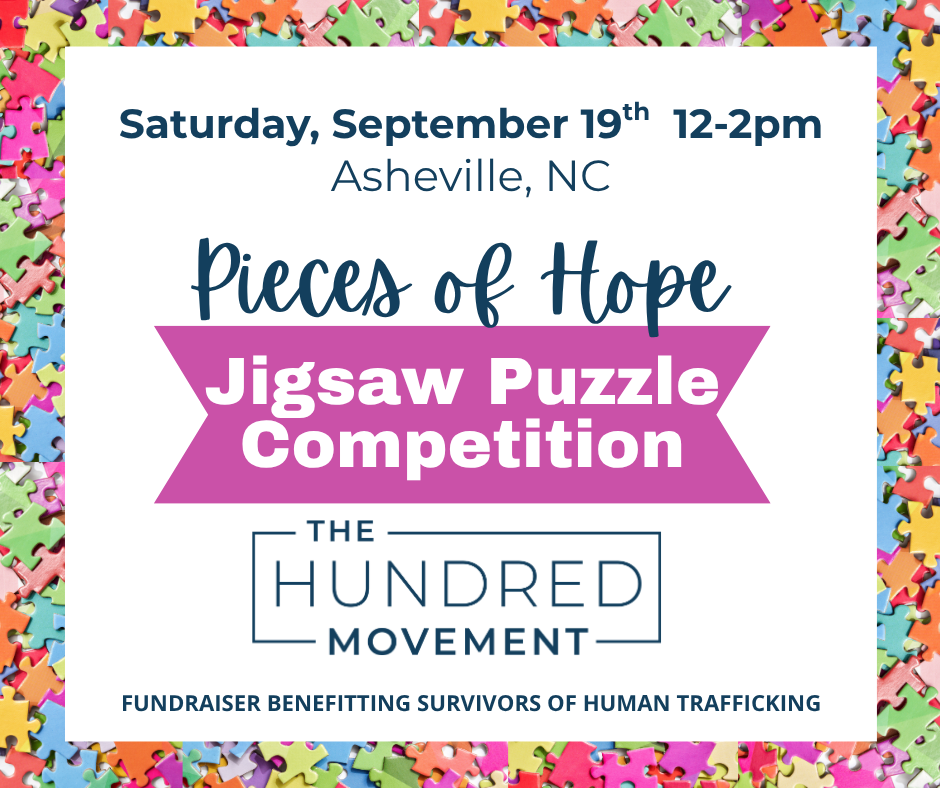
It’s Back!!
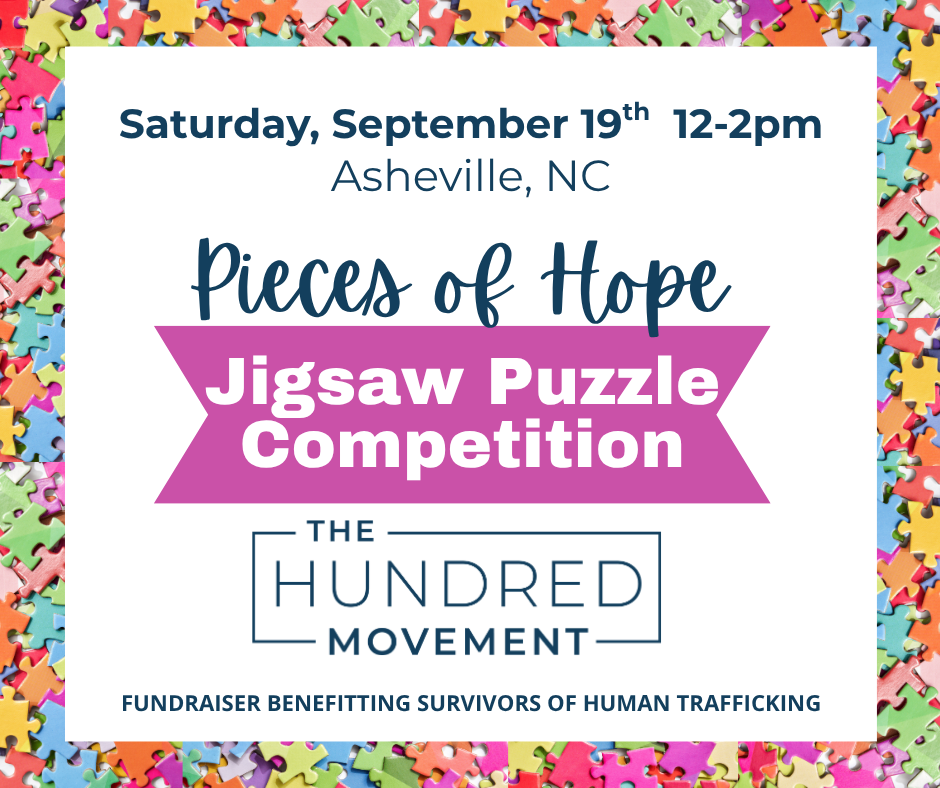


 Saturday, September 19th
 Asheville, North Carolina
 12-2pm
Human trafficking is a pervasive crime that hides in plain sight. While many cases go undetected, existing data still offers a sobering glimpse into the scale and complexity of the issue. Below are key statistics and trends that underscore the urgency of addressing this human rights crisis.
Source: United Nations Office on Drugs and Crime, “Global Report on Trafficking in Persons 2024.”
Sources: International Labour Organization (2022 estimates); U.S. Department of Homeland Security, “Human Trafficking Quick Facts.”
Sources: Congressional Research Service (CRS), “Human Trafficking Data Collection Activities 2024”; Bureau of Justice Statistics (BJS), “Human Trafficking Data Collection Activities”; FBI Annual Reports; U.S. Immigration and Customs Enforcement (ICE) Homeland Security Investigations data.
Source: United Nations Office on Drugs and Crime, “Global Report on Trafficking in Persons 2024.”
These statistics paint only a partial picture. They reflect reported and detected cases, which are believed to represent a small fraction of all human trafficking. The hidden nature of trafficking, varying definitions and capacities across countries, and limited resources for investigations mean that real numbers are likely much higher.
From a strategic perspective, these data help:
Human trafficking is one of the world’s most pressing human rights issues. Yet despite increased awareness, misinformation and myths continue to cloud the public’s understanding of what trafficking really looks like. These myths can harm victims by keeping them hidden and can even prevent communities from recognizing the warning signs.
In this article, we’ll debunk the most common human trafficking myths and shed light on the facts everyone should know.
The Truth: While abduction does happen, most traffickers don’t rely on kidnapping. Instead, they use manipulation, false promises, and coercion to lure victims. In many cases, victims believe they are pursuing legitimate job opportunities or relationships.
The Truth: Human trafficking occurs in every country in the world, including developed nations. Victims are exploited in both large cities and small towns. No community is immune.
The Truth: Although women and girls are disproportionately affected, men and boys are also victims of trafficking. They are often exploited in industries like agriculture, construction, and fishing. Trafficking impacts people of all genders and ages.
The Truth: Traffickers often rely on psychological control, threats, and manipulation, rather than chains or locked rooms. Victims may appear free to move, but fear, debt, or threats to loved ones keep them trapped.
The Truth: Smuggling involves the consensual transportation of people across borders. Trafficking is about exploitation, not movement. A victim can be trafficked without ever leaving their home community.
The Truth: Leaving is rarely simple. Victims may lack identification documents, money, or safe places to go. Many fear retaliation from traffickers or arrest by authorities due to misinformation or stigma.
The Truth: Trafficking is often hidden in plain sight. Victims may work in restaurants, factories, farms, or private homes. Outward appearances rarely tell the full story, which is why recognizing warning signs is critical.
The Truth: Traffickers are often family members, acquaintances, or trusted individuals. Exploitation frequently begins with someone the victim knows, making it harder to identify and resist.
Myths and misconceptions about human trafficking create barriers to identifying victims, protecting vulnerable populations, and prosecuting traffickers. The more accurately we understand the crime, the better equipped we are to prevent it and support survivors.
Human trafficking is complex, but dispelling myths is the first step in addressing it effectively. By challenging false beliefs and focusing on facts, communities can play a stronger role in prevention, protection, and justice for survivors.
Human trafficking is one of the most urgent human rights violations of our time. It affects millions of people worldwide, yet it is often misunderstood or confused with other crimes such as human smuggling. To truly combat this global issue, it is important to start with a clear understanding of what human trafficking is—and what it is not.
At its core, human trafficking is the exploitation of people through force, fraud, or coercion for the purpose of labor or sex. It is not about movement across borders, but about control and exploitation. Victims can be men, women, or children, and the crime can occur both internationally and within a single country.
Key elements include:
A common misconception is that trafficking always involves moving victims across borders. In reality, human smuggling is the illegal transportation of individuals across borders with their consent, while trafficking is about exploitation regardless of movement. A person can be trafficked in their own neighborhood without ever crossing a border.
There are several forms of trafficking, including:
Each form has devastating physical, emotional, and psychological impacts on victims.
Clear definitions matter because they influence laws, policies, and public understanding. Misunderstandings can prevent victims from being identified and supported. By defining trafficking precisely, governments, NGOs, and communities can better detect cases, prosecute traffickers, and provide proper care for survivors.
Warning signs may include: